- +971 04 589 7185
- +971 55 985 0868
- info@digital-signage.ae
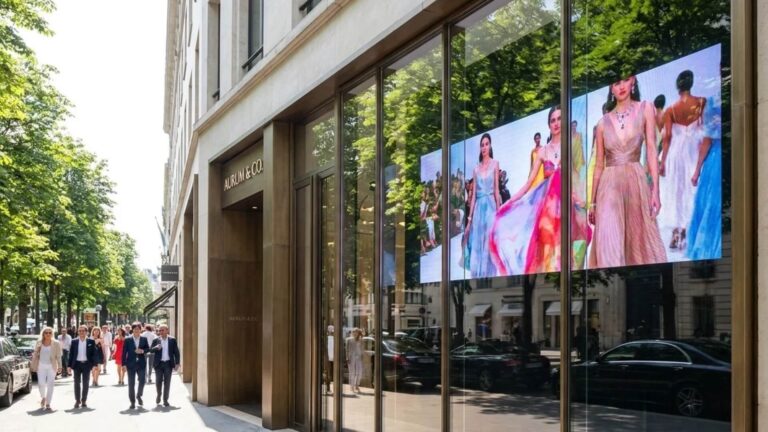
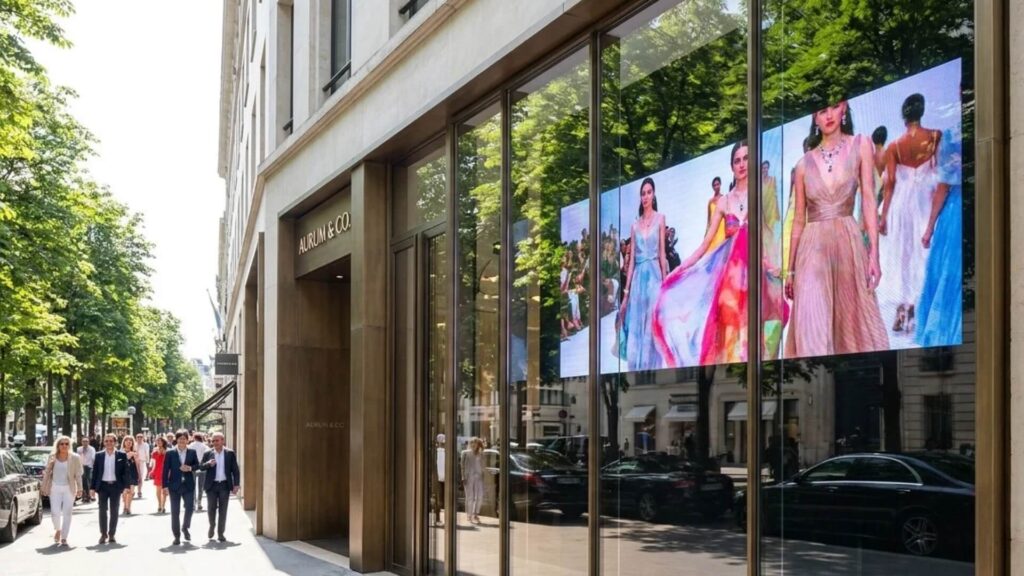
Imagine an LED screen installed on a commercial building facade during the day. The content is well designed, the colors are attractive, and the resolution is suitable, but there is one problem: sunlight makes it difficult for people to distinguish what is displayed. Now consider a screen installed in a meeting room with controlled lighting. Would it need exactly the same brightness level?
The answer is no. And that is precisely why choosing the right LED screen matters.
In digital signage projects, brightness is a feature that can determine content visibility and the overall viewing experience. However, selecting the highest available value is not always the best decision. A High Brightness LED Screen is particularly useful when lighting conditions create a visibility challenge, but its selection should be based on the actual characteristics of the environment.
A screen’s brightness indicates the intensity of the light it can emit. It is commonly measured in nits, a unit equivalent to candelas per square meter. The higher this value, the greater the luminance of the display surface.
This capability is important because content must remain visible in relation to the surrounding light. A screen installed outdoors and exposed to natural sunlight faces different conditions from a display used indoors under controlled lighting.
However, brightness is not the only factor that determines readability. Contrast, color reproduction, displayed content, viewing angle, and viewing distance also influence the experience.
That is why it is important to assess the overall operating environment before choosing a screen.
There are situations in which greater brightness can make a significant difference. Identifying them helps businesses select the right technology without investing in features their projects may not actually need.
LED screens installed on building facades, in public squares, along avenues, or in open spaces must compete visually with natural light. At certain times of the day, sunlight can reduce content visibility, particularly when the screen does not have sufficient brightness for its environment.
In these cases, a High Brightness LED Screen can help maintain clear visual communication and make messages easier to recognize from the intended viewing distances.
It is also important to consider the screen’s orientation, potential shadows, changing lighting conditions throughout the day, and the environmental characteristics of its location.
Not every screen that requires higher brightness is installed outdoors. Retail storefronts, glass entrances, and indoor spaces with large windows can receive considerable amounts of natural light.
When a screen is positioned near a window or in an area with intense lighting, its content may lose visual impact. A solution with greater brightness capabilities can help preserve visibility and maintain the effectiveness of promotional campaigns.
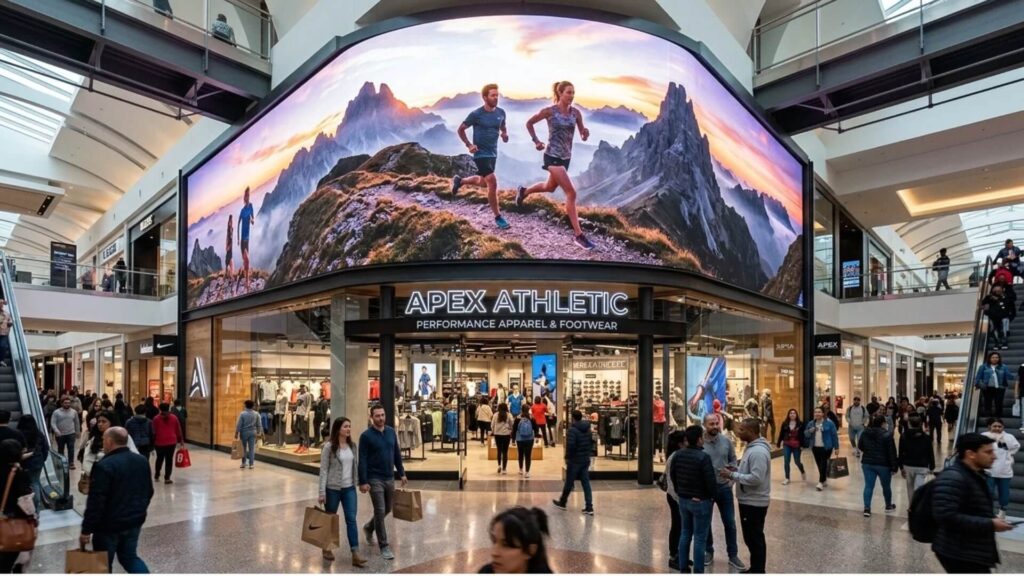
Shopping malls, airports, transportation stations, and large retail environments often combine artificial lighting, natural light, and constant foot traffic. In these settings, a screen must attract attention without compromising clarity.
The right choice depends on its exact location, the existing lighting conditions, and viewing distance. Not every area within the same building requires identical technical specifications.

Choosing a screen with brightness capabilities far beyond what is required can increase project costs without delivering proportional benefits.
In offices, meeting rooms, indoor corporate spaces, and other environments with controlled lighting, a screen with standard brightness levels may provide an entirely suitable viewing experience.
Visual comfort is another important consideration. A screen that is excessively bright in a dark or dimly lit environment can become uncomfortable and affect how people perceive its content.
The decision should not focus on achieving the highest possible figure, but on finding a brightness level that allows messages to be viewed clearly under normal operating conditions.
Brightness is only one part of the equation. To achieve good results, other project characteristics must also be evaluated.
Evaluating these variables helps avoid decisions based solely on nits and makes it possible to develop a more balanced solution.
A high-brightness screen should also offer configuration options that allow its performance to adapt to different lighting conditions.
During the day, higher brightness may be necessary, while at night or in indoor environments, reducing it may be more appropriate. This adjustment helps maintain a comfortable viewing experience and makes efficient use of the screen’s capabilities.
Brightness can be adjusted through manual settings or automatic control systems, depending on the equipment and installation.
This is particularly relevant for projects that operate for many hours or need to respond to significant changes in lighting throughout the day.
Before selecting an LED screen, it is worth answering a few essential questions: Where will it be installed? Will it receive direct sunlight? What type of lighting will the space have? From what distance will people view the content? Will it operate during the day, at night, or both?
With these answers, the manufacturer can help identify a solution that balances brightness, resolution, dimensions, and operating conditions.
At ENO Digital Signage, we understand that every installation requires a specific assessment. A High Brightness LED Screen may be the right choice when ambient lighting demands greater visual performance, but the key is selecting the configuration that each project actually needs.
The best screen is not necessarily the one with the highest number of nits, but the one that ensures content remains clear in the location and conditions for which it was designed.
Follow ENO Digital Signage on Instagram and LinkedIn to explore more digital signage solutions, applications, and industry trends. You can also read our previous blog articles to discover how to choose the right technology and develop LED projects with a strategic perspective.